

Designing Comfort: Grade 7's Journey to Harmonize Form and Function in their DT Project
Grade 7 students of our Middle School have taken on the creative challenge of reimagining foyer seating. Their mission: to refine the space’s aesthetic and functional qualities, ensuring it speaks to the school's identity while warmly welcoming parents and visitors.

The Power of Design
Design plays a pivotal role in shaping brand identity and enhancing user experience. It's not just about making things look good; it's about creating a space that feels good. This project's anchor lies in blending aesthetics with functionality, a principle these students are keenly exploring. By focusing on ergonomics and human factors, Grade 7 students learned the value of comfort and practicality in seating solutions—a crucial lesson in any design endeavor.
The Creative Process Unfurled
Embarking on this design journey, the students are introduced to the iterative nature of the design process. From conceptualization to prototyping, they engage in problem-solving and creativity, facing the challenge of redesigning the foyer with fresh perspectives. The challenge begins with a comprehensive understanding of the problem; they analyze the current foyer layout and engage with the community through questionnaires, ensuring their designs meet the needs of all users.
As the project progresses, students embark on brainstorming sessions, creating mood boards to inspire their creativity and expanding their knowledge of existing designs. Equipped with new insights, they sketch orthogonal and isometric drawings of their ideas. This project doesn't just stay on paper, though; it turns into real-world applications through rigorous prototyping.



Inspiration from the Best
A highlight of the project was the engaging session with guest speaker Wu Wenxiong, a designer with accolades in the Red Dot Design Awards. His insights into design history, design movements (Art Neuveau, Art Deco, Bauhaus, De Stijl, Modernism, etc. ) and his own creations provided a wellspring of inspiration. Students left the talk with broadened horizons, ready to infuse their work with creativity and innovation.
The Road Ahead
Throughout the ensuing weeks, students delve deep into designing with human factors in mind, exploring ergonomics and anthropometrics to ensure their creations are tailored for comfort and style. They create mood boards, draft detailed reports, and develop specifications and design briefs that will guide the creation of their final prototypes.
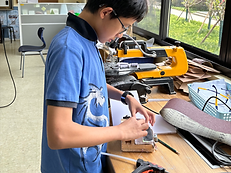
The hands-on phase of the project sees students constructing prototypes, putting them to the test, and refining their designs based on feedback. It’s an exercise in resilience and adaptability, learning that great design often emerges from iteration and improvement.

Sharing the Results
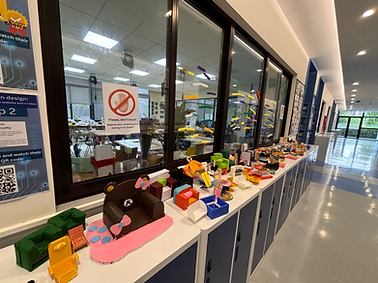
As the project draws to a close, students proudly showcase their prototypes, inviting feedback from the school community. This interactive component closes the loop, connecting their work back to the community it serves. Reflecting on their journey, students gain invaluable insights into their creative processes and the realities of bringing ideas from concept to completion.
The Legacy of Learning
Through this project, the Grade 7 students are not just redesigning seating; they are crafting a legacy of learning that merges creativity, empathy, and practical skills. Their work will stand as a testament to the power of young minds and the transformative impact of education rooted in real-world challenges.
Their journey reminds us all: design is not just about the spaces we inhabit, but about the people who inhabit them. And in this project, through careful consideration of form, function, and community, our students have indeed designed with both heart and mind.
